
Eliminating the Guesswork in Precision Manufacturing: A Stakeholder’s Guide
September 1, 2026
Sourcing complex metal parts is often a source of anxiety for project managers and procurement officers. You need components that fit perfectly and arrive on time, yet the process between handing over a blueprint and receiving a shipment can feel like a black box.
This lack of transparency is a risk that modern businesses cannot afford. A true partnership in precision manufacturing should never leave you guessing about the status or quality of your components. Instead, it should be a collaborative journey that transforms your digital designs into tangible, high-performance assets through a clear and predictable workflow.
First Steps: Working with a Reliable Casting Supplier
The relationship begins long before metal is poured. The initial engagement with a reliable casting supplier sets the trajectory for the entire project. This stage is not merely about submitting a Request for Quote and waiting for a price tag. It is a discovery phase where your partner invests time to understand the specific demands of your application.During this phase, you should expect a thorough review of your needs. This includes:
- Material Selection: Determining if your requested alloy is the most cost-effective option for the part’s operating environment.
- Volume Analysis: Assessing whether investment casting, sand casting, or another method best suits your quantity requirements.
- Timeline Alignment: Establishing realistic delivery schedules based on current capacity and tooling requirements.
A proactive partner will ask difficult questions early to prevent expensive surprises later. They will look for ways to consolidate parts or reduce secondary machining needs, ultimately driving down the total cost of ownership.
Engineering Verification and Design Refinement
Once the scope is defined, the technical team takes over to ensure the concept is manufacturable. This is where the difference between a simple vendor and a strategic partner becomes obvious. A vendor prints what you send them, even if the design has flaws. A partner analyzes the geometry to ensure it can be manufactured repeatedly without defects.
This technical review process typically involves:
- Design for Manufacturability (DFM): Engineers review your 2D and 3D files to identify features that might cause issues during the cooling process, such as isolated heavy sections that could lead to shrinkage.
- Prototyping: Foundries use 3D printing technologies to create wax patterns or rapid prototypes. This allows you to hold a physical model in your hand for fit-check verification before cutting hard tooling.
- Tooling Strategy: The team designs the mold to ensure optimal flow of molten metal, which is critical for maintaining dimensional accuracy.
This collaborative engineering prevents the “trial and error” approach that plagues many manufacturing projects. By validating the design digitally and physically before full-scale production, your partner ensures that the first production run meets your expectations.
The Assurance of an ISO 9001 Certified Foundry
Consistency is the currency of trust in manufacturing. When you work with an ISO 9001 certified foundry, you are buying into a system of rigorous quality management that governs every step of production. This certification is an operational framework that ensures every batch of metal meets strict chemical and mechanical standards.
Quality assurance happens at multiple checkpoints:
- Raw Material Verification: Testing the chemical composition of the alloy before it enters the furnace.
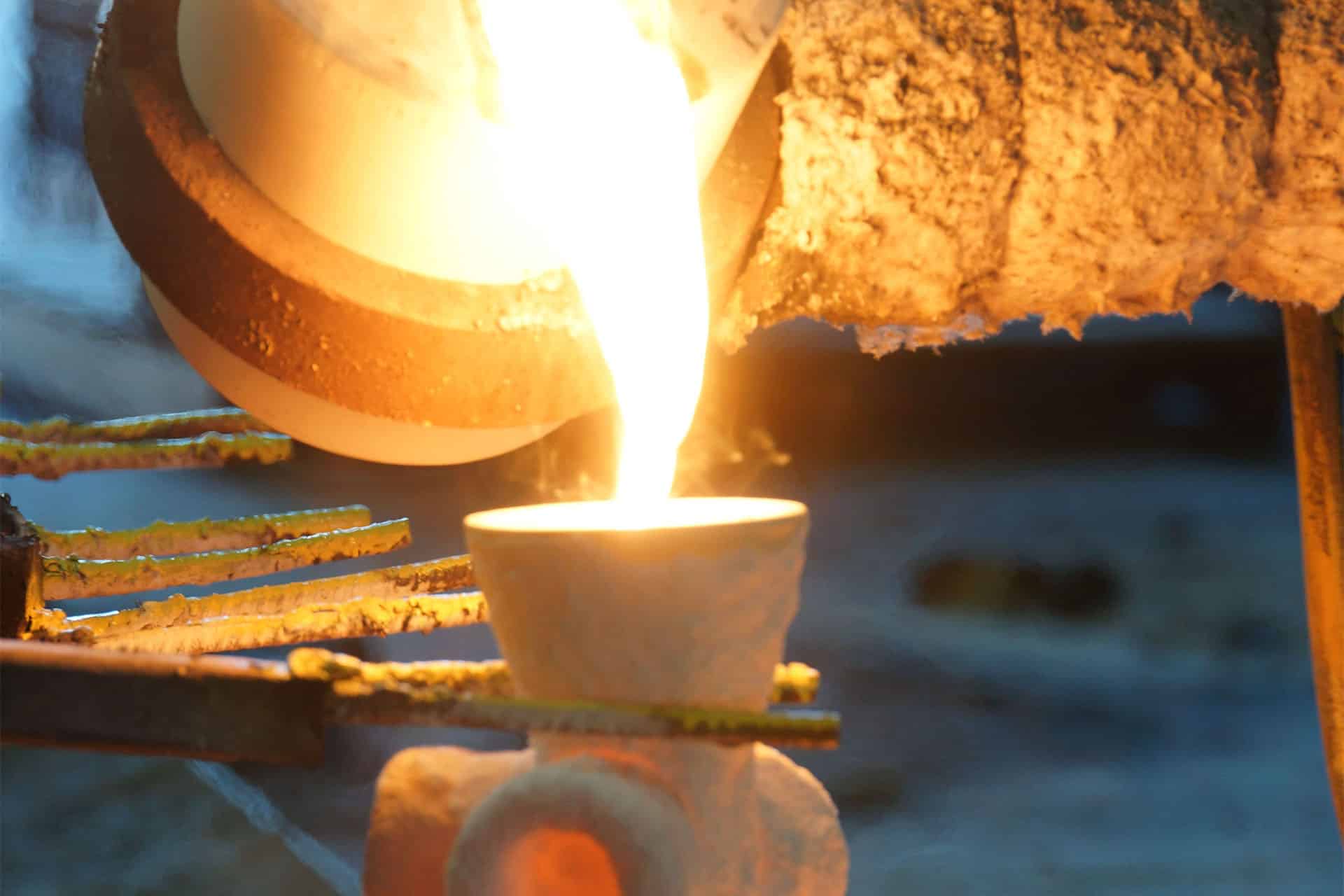
- Process Control: Monitoring temperature and humidity during the shell-building and pouring phases to prevent defects.
- Final Inspection: Using advanced tools like CMM (Coordinate Measuring Machines) or 3D scanning to verify that the final dimensions match the engineered drawings.
This structured approach minimizes variability. You receive parts that are uniform, safe, and ready for assembly immediately upon arrival.
Navigating the Contract Manufacturing Process
The final piece of the puzzle is logistics and supply chain management. A sophisticated contract manufacturing process handles the complexities of production so you do not have to. This involves managing raw material inventories, overseeing secondary operations like heat treating or machining, and coordinating shipping logistics.
For companies that require a balance of cost and speed, a partner with a hybrid model is invaluable. This allows for domestic production when speed is critical and offshore production when cost reduction is the priority. Your partner manages the import logistics, tariffs, and quality checks, providing you with a seamless experience regardless of where the part is cast.
Building a Long-Term Advantage
Selecting the right manufacturing partner is a strategic decision that impacts your product quality and your bottom line. When you choose a team that prioritizes transparency, engineering excellence, and rigorous quality control, you remove the guesswork from your supply chain.
If you are looking for a partner who acts as an extension of your own team, we invite you to review your current projects with Texas Precision Metalcraft. We are ready to help you optimize your component production for better performance and reliability.