
The Precision Edge: Understanding High-Tolerance Investment Casting
April 22, 2026
Modern engineering pushes the boundaries of what is physically possible. Designers and engineers constantly seek ways to reduce weight, increase strength, and fit complex functionality into tighter spaces. When a project demands exact specifications where a fraction of an inch determines success or failure, standard manufacturing methods often fall short. This is where the specialized capabilities of high-tolerance investment casting become essential.
Defining High-Tolerance and Near Net Shape
To understand the value of this process, it is helpful to define two critical concepts that drive efficiency in modern manufacturing.
What is High-Tolerance Investment Casting?
High-tolerance investment casting refers to the ability to produce metal parts with extremely low deviation from the original design dimensions. While all manufacturing processes have some degree of variation, investment casting allows for tight control over linear dimensions, flatness, and straightness. This precision reduces the need for extensive corrections after the metal solidifies.
What is Near Net Shape Manufacturing?
This term describes the production of items that are very close to the final (net) shape and size required. The goal is to reduce the initial raw material usage and significantly cut down on the machining time needed to finish the part. Instead of carving a complex bracket out of a solid block of steel and turning 60% of it into scrap shavings, we cast the bracket to look almost exactly like the finished product right out of the mold.
The Mechanics of Precision
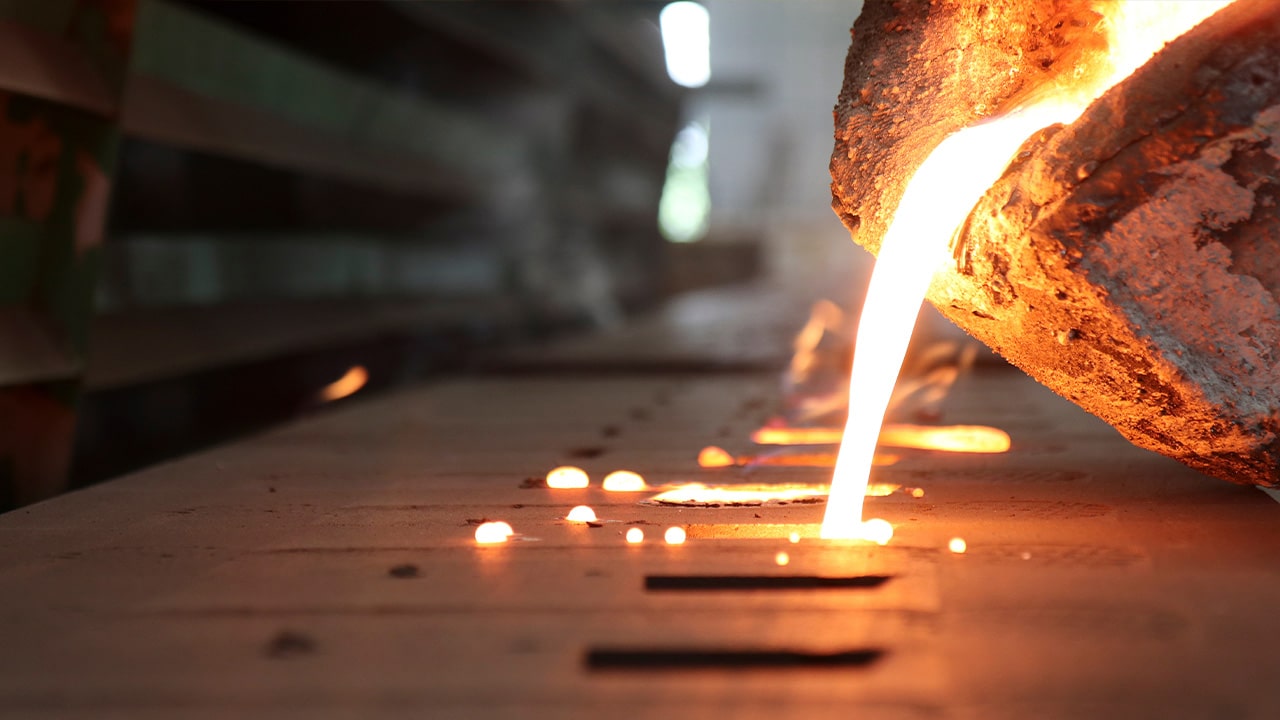
The secret to achieving investment casting tolerances lies in the ceramic shell process. We start by creating a wax pattern that is an exact replica of the desired part. This pattern is coated in multiple layers of ceramic slurry to form a hard shell. Once the wax is melted out, it leaves behind a cavity with a perfect surface finish and dimensional stability.
This method allows for the creation of precision metal components with features that other methods struggle to hold. We can maintain consistent wall thicknesses, create undercuts, and form internal passageways that would be impossible to machine. Because the ceramic mold is one continuous piece, there are no flash lines or parting line shifts that are common in sand casting or forging. This results in a superior surface finish that often requires no further polishing.
For engineers, this means greater design freedom. You can combine multiple parts into a single assembly, reducing the need for welding or fasteners. This consolidation improves the structural integrity of the component while simultaneously lowering assembly costs.
Industries Where High-Tolerance Is Crucial
High-tolerance casting is not necessary for every simple weight or counterweight. However, it is the standard for industries where failure is not an option and where component complexity is high.
We see the highest demand for these precise capabilities in sectors that operate under extreme stress or regulatory scrutiny.
- Aerospace and Defense: Aircraft components must be lightweight yet incredibly strong. Investment casting is used to create turbine blades, fuel system components, and structural brackets. These parts often feature complex aerodynamic shapes and internal cooling channels that must be precise to prevent engine failure.
- Medical Technology: Surgical instruments and orthopedics require surfaces that are easy to sterilize and dimensions that interact perfectly with the human body or other instruments. The casting process allows for the use of biocompatible alloys like stainless steel and cobalt-chrome with intricate, ergonomic designs.
- Oil and Gas: Downhole drilling tools and valve components operate in high-pressure, corrosive environments. A cast part with a solid, uniform grain structure offers better reliability than a welded assembly. Investment casting ensures that fluid passages in valves are smooth and dimensionally accurate to control flow rates effectively.
- Food Processing: Equipment in this sector requires smooth surfaces to prevent bacterial growth. Casting parts in stainless steel eliminates crevices where food particles could get trapped, simplifying the sanitation process.
- Power Generation: From land-based turbines to renewable energy hardware, power generation relies on heat-resistant alloys formed into complex shapes that maximize energy efficiency.
Reducing Costs with High-Tolerance Casting
A common misconception is that high-precision casting is always the most expensive option. While the initial tooling cost may be higher than sand casting, the total cost of ownership is often lower. This is because high-tolerance investment casting drastically lowers the amount of machining labor needed during the production process.
Consider a stainless steel connector with internal threads and a specific surface texture. If you machine this from bar stock, you pay for the material you remove and the time the machine runs. If you cast it, you only pay for the material in the part. Features like slots, holes, logos, and identification numbers can be cast directly into the surface.
Our team works with customers to identify which features can be cast to size and which require a final machining pass. This collaborative approach ensures that you are not paying for tighter tolerances than necessary while still taking full advantage of the near net shape capabilities of our foundries.
Partnering for Precision
Securing the right manufacturing partner is about more than just finding a vendor with a furnace. It requires a team that understands the metallurgy, the engineering constraints, and the timeline pressures you face. Texas Precision Metalcraft combines decades of foundry experience with a proactive approach to solving complex design challenges.
Whether you are looking to convert a multi-piece fabrication into a single casting or need to upgrade the quality of an existing component, our team is ready to review your specifications. We help you navigate the balance between cost and precision to deliver parts that perform exactly as intended.