
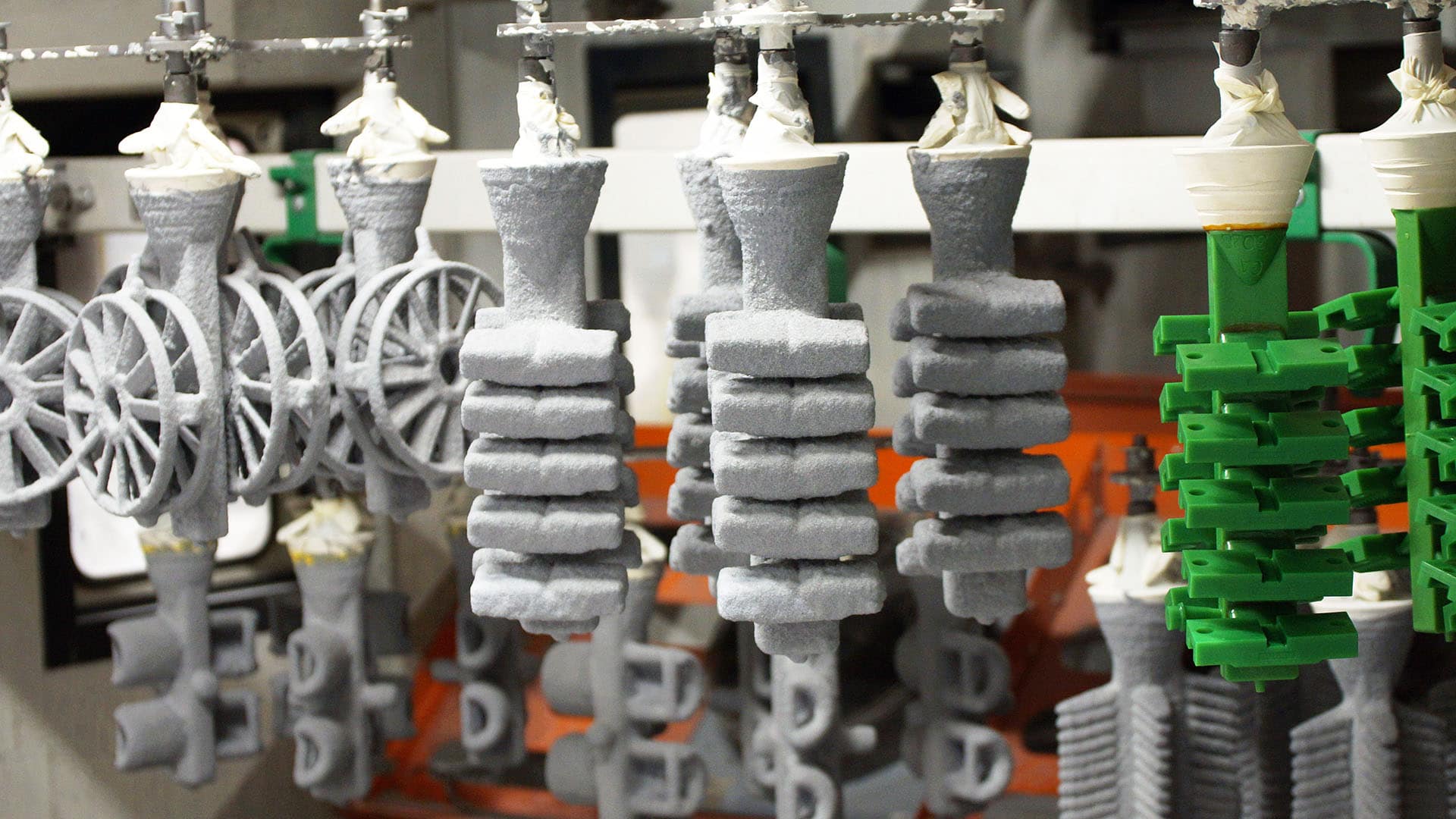
What Are the Benefits of Using Investment Casting for Manufacturing Parts?
December 3, 2025
If you work in metal manufacturing, you know that tight timelines, tight tolerances, and tight budgets rarely line up. Investment casting helps align them. The process creates near net shape parts with consistent quality, so your team spends less time machining and more time moving programs forward.
Why investment casting stands out
Investment casting is used when accuracy, detail, and a smooth as cast finish matter. It supports thin walls, complex geometries, and features that are difficult to machine from billet. Because the mold is formed around a precise pattern, you get repeatable results that protect interfaces, sealing surfaces, and cosmetic expectations.
Design freedom without runaway costs
The process allows you to consolidate multiple pieces into a single casting. That reduces fasteners, leak paths, and assembly time. Internal passageways, bosses, and fine lettering are possible, which lets you optimize flow, weight, and packaging. More function in the mold often means fewer secondary operations and fewer hours on the mill.
Surface finish that saves steps
A smoother as cast surface means less stock to remove and less time spent achieving a final finish. On pump and valve parts, that helps maintain sealing lands. On brackets and housings, it preserves features that would otherwise vanish under heavy machining. Over a production run, that reduction in touch time adds up.
Material flexibility for real environments
Investment casting supports a wide alloy range. Stainless and carbon steels, aluminum, and nickel based options are common. This flexibility lets you tune properties for heat, corrosion, wear, and weight targets. You choose the alloy that fits the job, then let the process deliver a clean, consistent shape in that material.
Predictable quality and documentation
A disciplined foundry treats quality as a system. Dimensional inspection, material test reports, and traceable heat data keep requirements visible and verifiable. When your program moves from prototype to production, the same checks apply, which lowers the risk of late surprises. Predictable controls are part of the value, not an extra.
Lead times that support iteration
Short feedback loops are the secret to better products. With tooling free pattern options and additive workflows, teams move from CAD to cast quickly, then learn from real parts. That speed helps confirm fit and function early. When a change is needed, patterns update quickly, so you can iterate without losing months. When investment casting helps the most Use investment casting when you need:
- Complex geometry that would be expensive to machine.
- Thin, uniform walls that reduce weight.
- A smooth surface that protects sealing or cosmetic needs.
- Consistent, repeatable results across low to mid volumes.
- A reliable path from prototype to production without a reset.
A practical way to start
Start by sharing a model, a drawing, or even a field sample. A capable partner will review manufacturability, suggest small design improvements, and recommend the process window that meets your cost and schedule targets. If the part belongs in another metal casting method, they will say so. The goal is a solution that works on day one and keeps working at scale.
Every program deserves a process that balances precision and practicality. If you want a deeper dive on how investment casting fits your part and budget, read our investment casting overview. When you are exploring suppliers, see our services page to understand how engineering, casting, and finishing connect. When you are ready to move, request a fast, no nonsense quote and we will return a grounded plan with dates you can trust and results.